
Stop Selling Your Solar Cheap and Buying It Back at Peak
Every afternoon, businesses across Australia export their surplus solar to the grid for a few cents, then buy power back a few hours later at peak rates. Commercial battery storage closes that gap. It captures the energy your site produces, uses it when power is most expensive, and with Smart Stack, can even earn money for your business by supporting the grid.
We were named Australia’s #1 Commercial Battery Installer in 2025, and we design every battery as part of a complete energy system, not an add-on. With payback periods for commercial batteries now typically under five years, the question is no longer whether a battery stacks up, but how much it could be saving you already.

How Commercial Battery Storage
Saves (and Makes) You Money

Cut Peak Demand Charges
Demand charges are set by your highest spikes in usage, and they can quietly account for a large share of your bill. A battery discharges during those peaks so your site draws less from the grid when it costs the most.

Keep Your Solar Value On Site
Instead of exporting surplus solar for a low feed-in rate, a battery stores it for the evening, when your site still needs power and grid prices are higher.

Earn From the Energy Markets
For years, high costs and long paybacks held batteries back. Now battery monetisation has removed that barrier forever. Smart Stack uses AI to decide when to use your stored energy on site and when to sell it to the grid, including in markets such as FCAS.

Protect Your Operations
Batteries can keep critical equipment running during outages and, for many sites, reduce or replace reliance on diesel generators. For remote and end-of-grid sites, solar and battery together can form a microgrid that runs independently of the main grid.

Cut Scope 2 Emissions
Every kilowatt-hour your site generates and uses itself is one you are not buying from a fossil-heavy grid, helping you meet your ESG commitments and customer expectations.

Use Far More of Your Own Energy
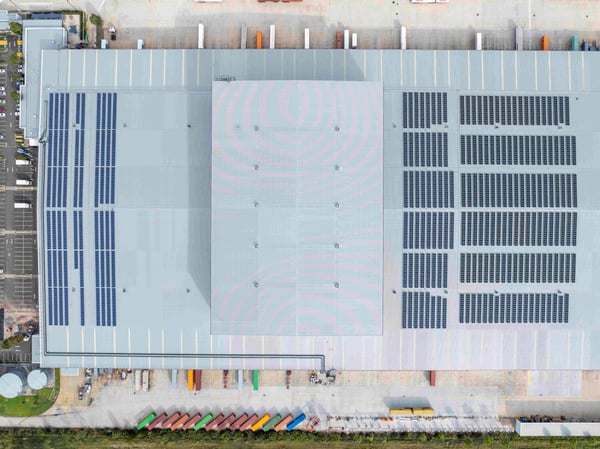
A typical business offsetting around 30% of its consumption with solar can comfortably reach 50 to 70% with a battery. At Bunnings Alice Springs, a 430kW solar system with a 600kWh battery generates around 80% of the store’s energy.
Already Have Solar, or Starting Fresh?
Already have solar
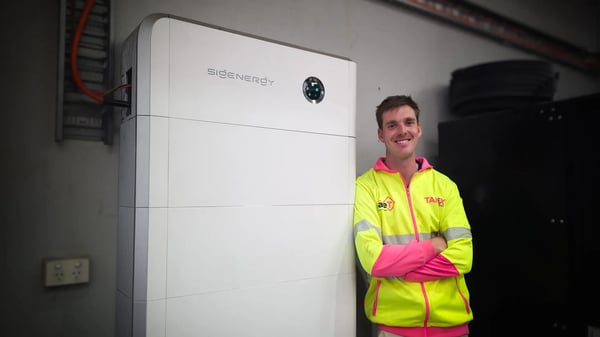
Most of our battery clients already have solar. Adding storage is often simpler than businesses expect, even on sites where switchboards are full. At Team Medical Supplies, we swapped an existing inverter for a hybrid unit and fitted the whole battery system into a single car space, with no disruption to the site’s cold rooms.
Starting fresh
If you are new to solar, designing solar and battery together gives you the best outcome from day one. The system is sized around how your site actually uses energy across the whole day and night, not just when the sun is shining.


Battery sizing
How a Commercial Battery Is Sized
A commercial battery has two key ratings. Power (kW) is how quickly it can charge or discharge, which determines how much of a demand peak it can shave. Energy capacity (kWh) is how much it can store, which determines how long it can keep supplying your site.
We size every system from your interval data: when your site uses power, how sharp your peaks are, how much solar you export and what your tariff structure rewards.
That analysis is what turns a battery from a nice idea into a sound investment.


Does a Commercial Battery Pay for Itself?
For most commercial sites, yes. Payback periods for commercial batteries are now typically under five years. The main factors that shape your return are:
- your tariff structure, especially demand charges
- how much solar you currently export
- how much energy your site uses in the evening and overnight
- incentives such as the NSW PDRS
- additional earnings through Smart Stack
We model all of these before you commit, so you can see the business case for your site, not an industry average. A battery will not stack up for every site, and if it does not for yours, we will be the first to tell you.
Read more: Is commercial battery storage worth it?
NSW Battery Incentive
The NSW PDRS Battery Incentive
From 1 September 2026, the NSW Government’s Peak Demand Reduction Scheme (PDRS) covers commercial and apartment battery storage for the first time, under the Energy Security Safeguard.
Eligible projects generate Peak Reduction Certificates, which provide an upfront incentive to help offset the cost of the battery. The value depends on battery capacity, inverter size, whether new solar is installed alongside the battery, and the market value of certificates at the time.
We take care of the paperwork and build the incentive into your business case.

 BESS3: Apartment buildings
Shared batteries in apartment buildings with four or more dwellings, from 20kWh to 200kWh, where no battery is already installed.
BESS4: Business batteries
Business battery systems from 20kWh to 200kWh.
BESS5: Large commercial and industrial
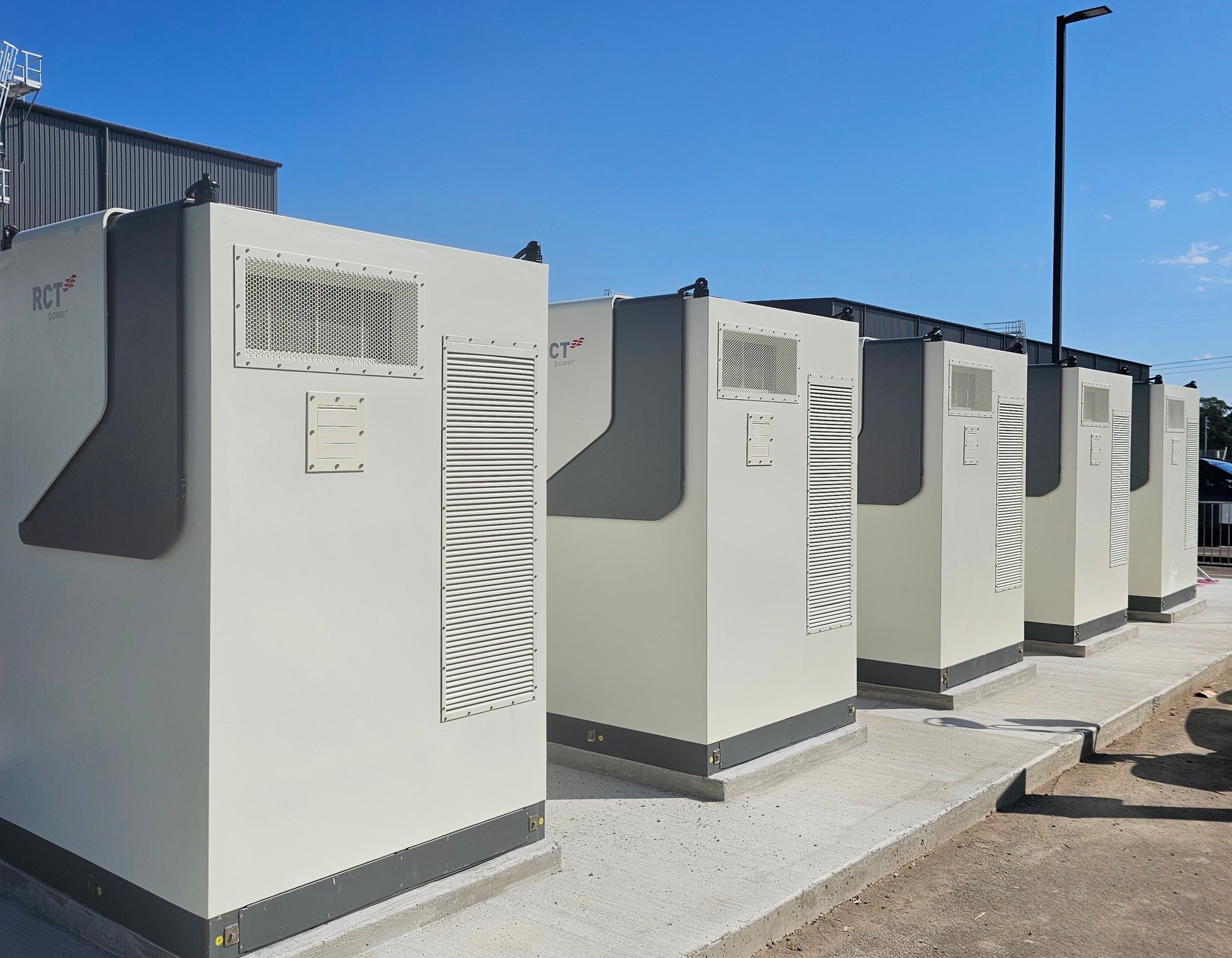
Larger commercial and industrial systems from 200kWh to 30MWh.

Battery monetisation
Smart Stack: Turn Your Battery Into an Earning Asset
Smart Stack is our set-and-forget battery monetisation service. We install a small device on your battery and inverter, and our AI-powered platform manages your stored energy for the best financial outcome: reducing your peak costs and selling energy to the grid when it pays, including in markets such as FCAS.
You receive monthly reports on earnings and performance, and we look after operations and maintenance.
Find out more about Smart Stack

No Upfront Cost With a Payment Plan
A battery does not have to compete with other capital projects for budget. With a Payment Plan, there is no upfront cost: you spread the investment over five to ten years, with repayments that can be lower than the savings the system delivers.
Prefer to own it outright? Capital purchase is also available, and we will show you how each option compares for your site.


For fan mail:
Get In Touch, We Love Talking Batteries!
Tell us about your site and we will show you what a battery could save, and earn, for your business.